

CBD has become one of the most talked-about tools in the pain relief world.
Some people report significant benefits. Others say it does nothing.
The reality is usually more nuanced.
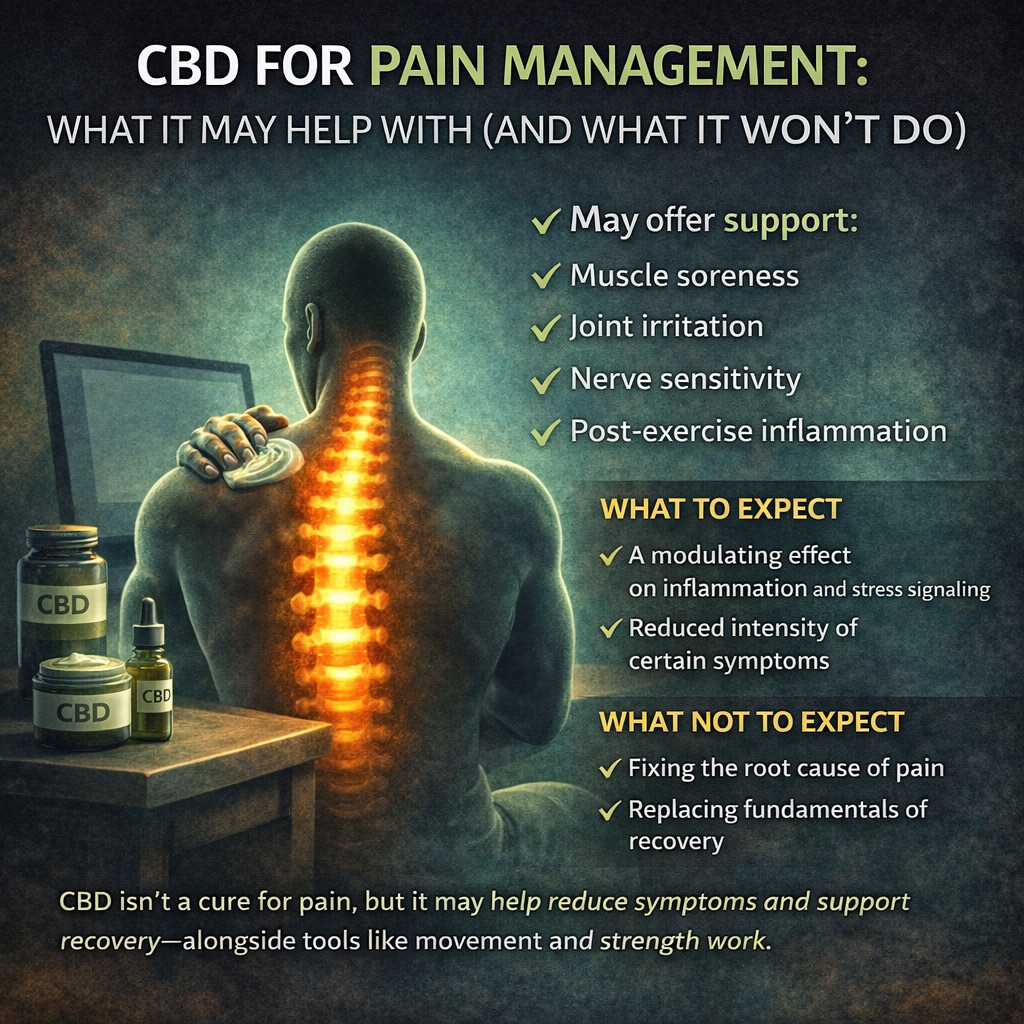
CBD is not a cure for pain, but it may support recovery in certain situations by influencing inflammation signaling, nerve sensitivity, and stress response.
Understanding how CBD works — and how to choose an effective formulation — helps prevent unrealistic expectations.
What CBD Actually Is
CBD (cannabidiol) is a compound derived from the cannabis plant.
Unlike THC, CBD does not produce intoxication or a “high.”
Instead, CBD interacts with the body’s endocannabinoid system, a regulatory system involved in processes such as:
• inflammation signaling
• stress response
• immune activity
• nerve sensitivity
• sleep regulation
Because these systems influence pain perception, CBD is often used as a support tool during recovery.
Situations Where CBD May Help
CBD does not fix structural problems or replace rehabilitation.
However, some people report symptom relief in situations involving inflammation or tissue irritation.
Examples may include:
• muscle soreness
• joint irritation
• exercise-related inflammation
• nerve sensitivity
• flare-up phases
CBD may help modulate inflammatory signaling and reduce symptom intensity, which can make movement and recovery activities easier.
Results vary between individuals.
Topical CBD vs Oral CBD
CBD products generally fall into two main categories.
Topical CBD
Topicals include:
• creams
• lotions
• balms
• roll-ons
These are applied directly to the skin.
Topical CBD is commonly used for localized discomfort, such as:
• neck tension
• shoulder soreness
• knee irritation
• lower back pain
Topicals work primarily in the tissue where they are applied, rather than circulating throughout the body.
Oral CBD
Oral CBD products include:
• tinctures
• capsules
• softgels
These enter the bloodstream and may influence systemic inflammation and stress signaling.
Oral CBD often takes longer to produce noticeable effects compared to topical applications.
Why CBD Strength Matters
One of the biggest differences between CBD products is potency.
Most CBD creams list the total milligrams of CBD in the container, but this number alone does not tell the full story.
What matters more is CBD concentration.
In other words:
How much CBD is contained per ounce of product.
How to Calculate Real CBD Strength
To understand potency, divide the total CBD by the container size.
Example:
300 mg CBD in a 4-oz jar
Calculation:
300 mg ÷ 4 oz = 75 mg per ounce
This is a relatively low concentration.
Higher potency example
3000 mg CBD in a 4-oz container
Calculation:
3000 mg ÷ 4 oz = 750 mg per ounce
This formulation is 10× stronger.
Because the CBD is less diluted in the base cream, each application may deliver a greater concentration to the tissue.
Why Higher Potency Topicals Are Often Preferred
Many people who report better results with CBD creams are using higher concentration formulas.
Lower-dose creams may spread small amounts of CBD across a large volume of lotion.
This dilution can reduce the amount of CBD delivered to the area during each application.
Higher potency creams allow a smaller amount of product to deliver a meaningful concentration.
This does not guarantee effectiveness, but it may increase the likelihood of noticeable effects.
Choosing a Quality CBD Product
CBD product quality varies widely.
When evaluating CBD products, look for:
• third-party lab testing
• clear potency labeling
• reputable sourcing
• minimal unnecessary additives
These factors help ensure the product contains what the label claims.
CBD Is a Support Tool — Not a Solution
Even high-potency CBD products should be viewed as support tools, not primary solutions.
Long-term improvement usually requires:
• movement exposure
• gradual loading
• strength development
• recovery habits
• improved tolerance to activity
CBD may help reduce symptom intensity, but the body still adapts primarily through capacity building.
A Practical Way to Use CBD
Some people use CBD during:
• flare-ups
• periods of increased training
• post-exercise soreness
• high stress phases
Used strategically, it may help make movement and recovery work easier to tolerate.
The goal is not eliminating every symptom.
The goal is supporting the process of adaptation.
The PCS Approach
Pain Care Supply focuses on helping people understand pain and build long-term capacity.
Tools like CBD may help support the process, but they work best when combined with:
• movement
• strength
• gradual exposure to activity
Recovery is usually a system, not a quick fix.
Start building your recovery framework:
CBD has become one of the most talked-about tools in the pain relief world.
Some people report significant benefits. Others say it does nothing.
The reality is usually more nuanced.
CBD is not a cure for pain, but it may support recovery in certain situations by influencing inflammation signaling, nerve sensitivity, and stress response.
Understanding how CBD works — and how to choose an effective formulation — helps prevent unrealistic expectations.
What CBD Actually Is
CBD (cannabidiol) is a compound derived from the cannabis plant.
Unlike THC, CBD does not produce intoxication or a “high.”
Instead, CBD interacts with the body’s endocannabinoid system, a regulatory system involved in processes such as:
• inflammation signaling
• stress response
• immune activity
• nerve sensitivity
• sleep regulation
Because these systems influence pain perception, CBD is often used as a support tool during recovery.
Situations Where CBD May Help
CBD does not fix structural problems or replace rehabilitation.
However, some people report symptom relief in situations involving inflammation or tissue irritation.
Examples may include:
• muscle soreness
• joint irritation
• exercise-related inflammation
• nerve sensitivity
• flare-up phases
CBD may help modulate inflammatory signaling and reduce symptom intensity, which can make movement and recovery activities easier.
Results vary between individuals.
Topical CBD vs Oral CBD
CBD products generally fall into two main categories.
Topical CBD
Topicals include:
• creams
• lotions
• balms
• roll-ons
These are applied directly to the skin.
Topical CBD is commonly used for localized discomfort, such as:
• neck tension
• shoulder soreness
• knee irritation
• lower back pain
Topicals work primarily in the tissue where they are applied, rather than circulating throughout the body.
Oral CBD
Oral CBD products include:
• tinctures
• capsules
• softgels
These enter the bloodstream and may influence systemic inflammation and stress signaling.
Oral CBD often takes longer to produce noticeable effects compared to topical applications.
Why CBD Strength Matters
One of the biggest differences between CBD products is potency.
Most CBD creams list the total milligrams of CBD in the container, but this number alone does not tell the full story.
What matters more is CBD concentration.
In other words:
How much CBD is contained per ounce of product.
How to Calculate Real CBD Strength
To understand potency, divide the total CBD by the container size.
Example:
300 mg CBD in a 4-oz jar
Calculation:
300 mg ÷ 4 oz = 75 mg per ounce
This is a relatively low concentration.
Higher potency example
3000 mg CBD in a 4-oz container
Calculation:
3000 mg ÷ 4 oz = 750 mg per ounce
This formulation is 10× stronger.
Because the CBD is less diluted in the base cream, each application may deliver a greater concentration to the tissue.
Why Higher Potency Topicals Are Often Preferred
Many people who report better results with CBD creams are using higher concentration formulas.
Lower-dose creams may spread small amounts of CBD across a large volume of lotion.
This dilution can reduce the amount of CBD delivered to the area during each application.
Higher potency creams allow a smaller amount of product to deliver a meaningful concentration.
This does not guarantee effectiveness, but it may increase the likelihood of noticeable effects.
Choosing a Quality CBD Product
CBD product quality varies widely.
When evaluating CBD products, look for:
• third-party lab testing
• clear potency labeling
• reputable sourcing
• minimal unnecessary additives
These factors help ensure the product contains what the label claims.
CBD Is a Support Tool — Not a Solution
Even high-potency CBD products should be viewed as support tools, not primary solutions.
Long-term improvement usually requires:
• movement exposure
• gradual loading
• strength development
• recovery habits
• improved tolerance to activity
CBD may help reduce symptom intensity, but the body still adapts primarily through capacity building.
A Practical Way to Use CBD
Some people use CBD during:
• flare-ups
• periods of increased training
• post-exercise soreness
• high stress phases
Used strategically, it may help make movement and recovery work easier to tolerate.
The goal is not eliminating every symptom.
The goal is supporting the process of adaptation.
The PCS Approach
Pain Care Supply focuses on helping people understand pain and build long-term capacity.
Tools like CBD may help support the process, but they work best when combined with:
• movement
• strength
• gradual exposure to activity
Recovery is usually a system, not a quick fix.
Start building your recovery framework:
If you’re exploring CBD as a support tool during recovery, you can view the CBD options available through the Pain Care Supply dispensary here: