

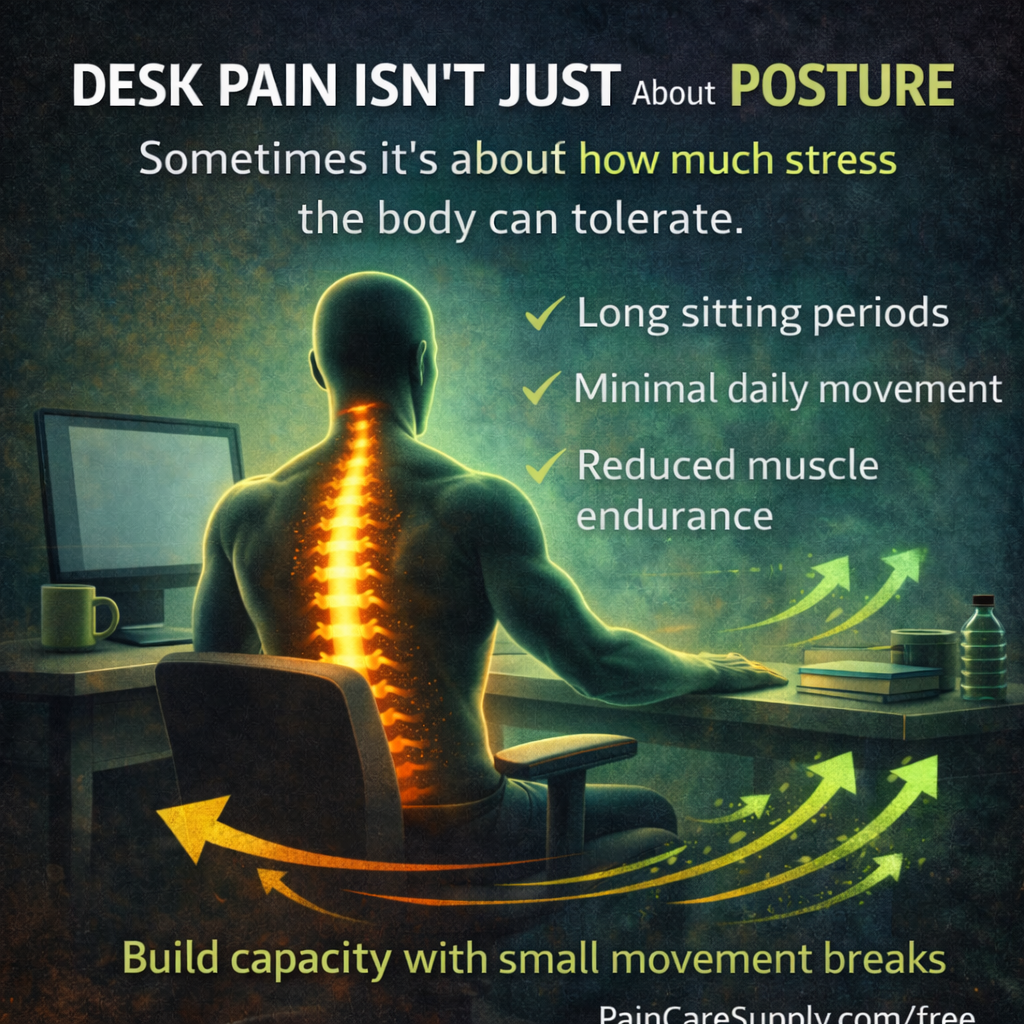
Why Capacity Matters More Than Perfect Sitting
Many people believe desk pain is caused by “bad posture.”
So they try to sit perfectly straight, buy expensive chairs, or constantly adjust their position.
Sometimes that helps temporarily.
But posture alone rarely explains why desk pain keeps returning.
In many cases, the real issue is capacity.
Pain Often Reflects Load vs Capacity
Your body constantly manages stress.
At a desk, that stress may include:
• Long sitting periods
• Low daily movement
• Static muscle activity
• Reduced spinal movement
These demands aren’t dangerous.
But if the capacity of your muscles and tissues is low, even small stresses can trigger symptoms.
Pain often appears when load temporarily exceeds capacity.
Not necessarily because something is damaged.
Why “Perfect Posture” Doesn’t Fix the Problem
Trying to maintain perfect posture all day can actually increase fatigue.
Muscles that stay active without variation eventually tire.
When fatigue builds:
• the nervous system becomes more sensitive
• small stresses feel larger
• discomfort appears sooner
This is why someone can sit “perfectly” and still experience pain.
The body usually tolerates variation better than rigidity.
Capacity Is Built Through Exposure
The goal is not avoiding stress completely.
The goal is gradually improving your ability to tolerate it.
Capacity improves through:
• short movement breaks
• gradual increases in sitting tolerance
• regular walking
• simple strength work
These exposures help the system adapt.
Over time the same workload feels easier.
Signs Capacity Is Improving
Progress isn’t always measured by pain disappearing.
More useful indicators include:
• sitting longer before symptoms start
• working longer without flare-ups
• walking farther comfortably
• recovering faster after activity
These changes suggest your tolerance is expanding.
The Desk Pain Trap
A common cycle looks like this:
Pain → avoid movement → capacity shrinks → pain returns sooner.
Avoidance feels protective, but it often reduces tolerance over time.
Breaking the cycle usually requires measured re-exposure to load.
A Simple Starting Strategy
Instead of chasing perfect posture, try focusing on capacity.
Examples:
• Stand or walk briefly every 30–60 minutes
• Change sitting positions periodically
• Add short walks during the day
• Include basic strength exercises several times per week
These small exposures gradually expand what your body can handle.
Pain Isn’t Always a Setback
Pain doesn’t always mean something is wrong.
Sometimes it simply reflects a system asking:
“Can you handle this yet?”
With gradual exposure and consistency, tolerance often improves.
Start Building Capacity
If desk pain keeps coming back, the solution may not be a better chair or stricter posture.
It may be building the system’s capacity to tolerate daily stress.
Start small.
Progress gradually.
Allow adaptation to occur.
👉 Start here: