

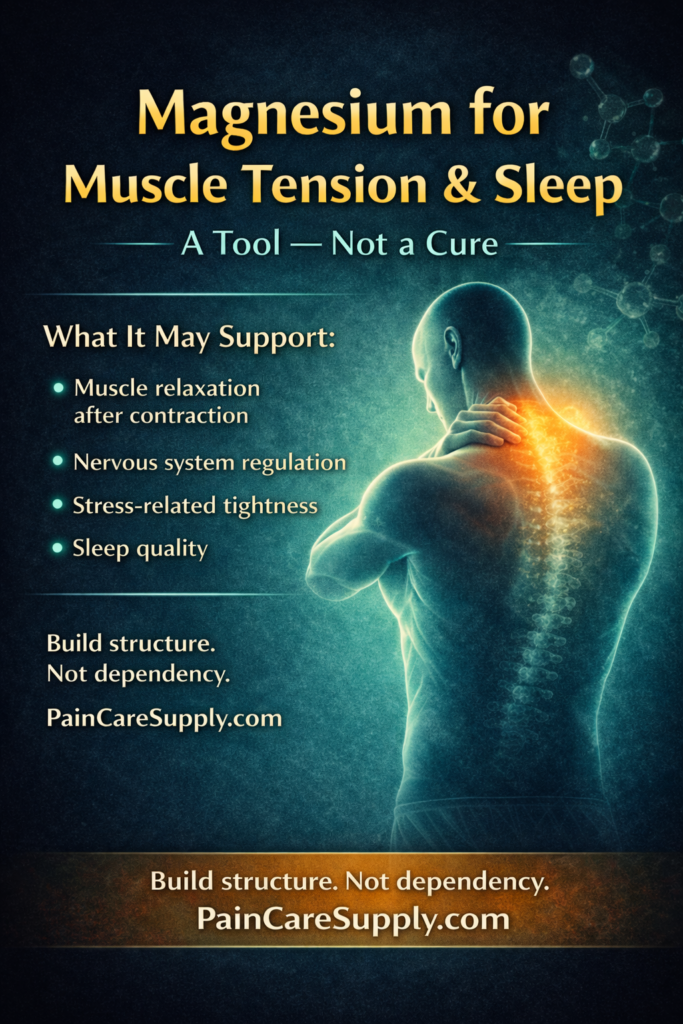
A structured look at what it may support
Magnesium has become one of the most talked-about minerals in recovery and pain discussions.
But instead of hype, let’s break it down clearly.
Magnesium is involved in more than 300 biochemical reactions in the body. It plays a role in muscle contraction and relaxation, nerve signaling, energy production, and sleep regulation.
It is not a cure.
It is not a standalone solution.
But in the right context, it may support how your body manages tension, stress, and recovery.1. Magnesium & Muscle Tension
Muscles contract and relax through electrical signaling.
Calcium helps muscles contract. Magnesium helps them relax after contraction. When magnesium levels are insufficient, muscles may feel:
- Tight
- Overactive
- Easily fatigued
- Prone to cramping
For physically active individuals or people under chronic stress, magnesium may support muscle relaxation and recovery.
This does not replace mobility work, strength training, or proper load management. It may complement them.
2. Magnesium & the Nervous System
Your nervous system directly influences muscle tone.
Stress increases sympathetic (“fight or flight”) activity, which can elevate baseline tension throughout the body.
Magnesium is associated with supporting parasympathetic (“rest and regulate”) activity. Some individuals report:
- Feeling less wired at night
- Reduced stress-related tightness
- Easier transition into sleep
Magnesium does not remove stress from your life.
It may help regulate your physiological response to it.
3. Magnesium & Sleep Quality
Sleep is when tissue repair, hormone regulation, and nervous system recalibration occur.
Magnesium has been studied for its role in:
- Supporting melatonin balance
- Supporting GABA activity (a calming neurotransmitter)
- Reducing nighttime muscle tightness
Better sleep does not “fix pain.”
But better recovery can improve capacity, resilience, and how discomfort is experienced the next day.
4. Oral vs. Topical Magnesium
People commonly use magnesium in two ways.
Oral Forms
Common forms include:
- Magnesium glycinate
- Magnesium citrate
- Magnesium threonate
Each form has different absorption characteristics and digestive tolerance. Some are commonly chosen for relaxation support, while others are more likely to affect digestion.
Topical Forms
Lotions, oils, and sprays are often used for:
- Local muscle areas
- Post-exercise application
- Evening relaxation routines
Topical magnesium is popular for muscle-specific use, though systemic absorption may vary.
Neither method is universally superior. The appropriate approach depends on individual context and goals.
5. Quality & Sourcing Matter
If you choose to supplement, product quality matters.
Look for brands that:
- Use transparent ingredient sourcing
- Conduct third-party testing
- Clearly list the magnesium form
You can explore professional-grade magnesium options here:
https://www.thorne.com/u/PR2106491
Always consult a qualified healthcare professional before beginning supplementation, especially if you have underlying conditions or take medications.
6. Magnesium Is a Tool — Not the System
The most common mistake people make is looking for a single solution.
Magnesium is not the system.
It is one tool.
If tension or discomfort continues to return, a structured approach often includes:
- Movement strategy
- Strength and load management
- Sleep optimization
- Stress regulation
- Targeted recovery tools
Magnesium may support that framework. It does not replace it.
Where to Start
If you feel overwhelmed trying to piece everything together, that is exactly why we created the Pain Relief Starter Toolkit.
It provides a simple framework to help you stop chasing random solutions and start building structure.
Magnesium can fit inside that framework — not act as the entire plan.
Explore the full Starter Toolkit here:
www.PainCareSupply.com
Disclaimer
This article is for educational purposes only and does not constitute medical advice. Individual responses vary. Consult a qualified healthcare professional before beginning supplementation.