

MEDICAL DISCLAIMER
This content is for informational and educational
purposes only. It is not medical advice and does
not replace the guidance of a licensed healthcare
provider. If you are experiencing pain, injury,
or any health condition, consult a qualified
medical professional before beginning any movement
or self-management program. Do not use this
content to diagnose or treat any condition.
────────────────────────────────────────
If getting out of bed triggers your low back pain
— you are not alone. Here is the first step.
Most people sit straight up or twist out of bed.
It feels faster. It feels natural.
But that is exactly what keeps this cycle going.
Your spine goes from zero load to full load
too quickly. Before your body is ready.
That is why the same pain shows up again
the next morning.
This is not about strength.
This is not about pushing through it.
This is not a flexibility problem.
This is about giving your body a structure
it can actually tolerate.
Nobody showed you this. That is the real problem.
Not your back.
This is where you actually start.
────────────────────────────────────────
DO THIS FIRST
────────────────────────────────────────
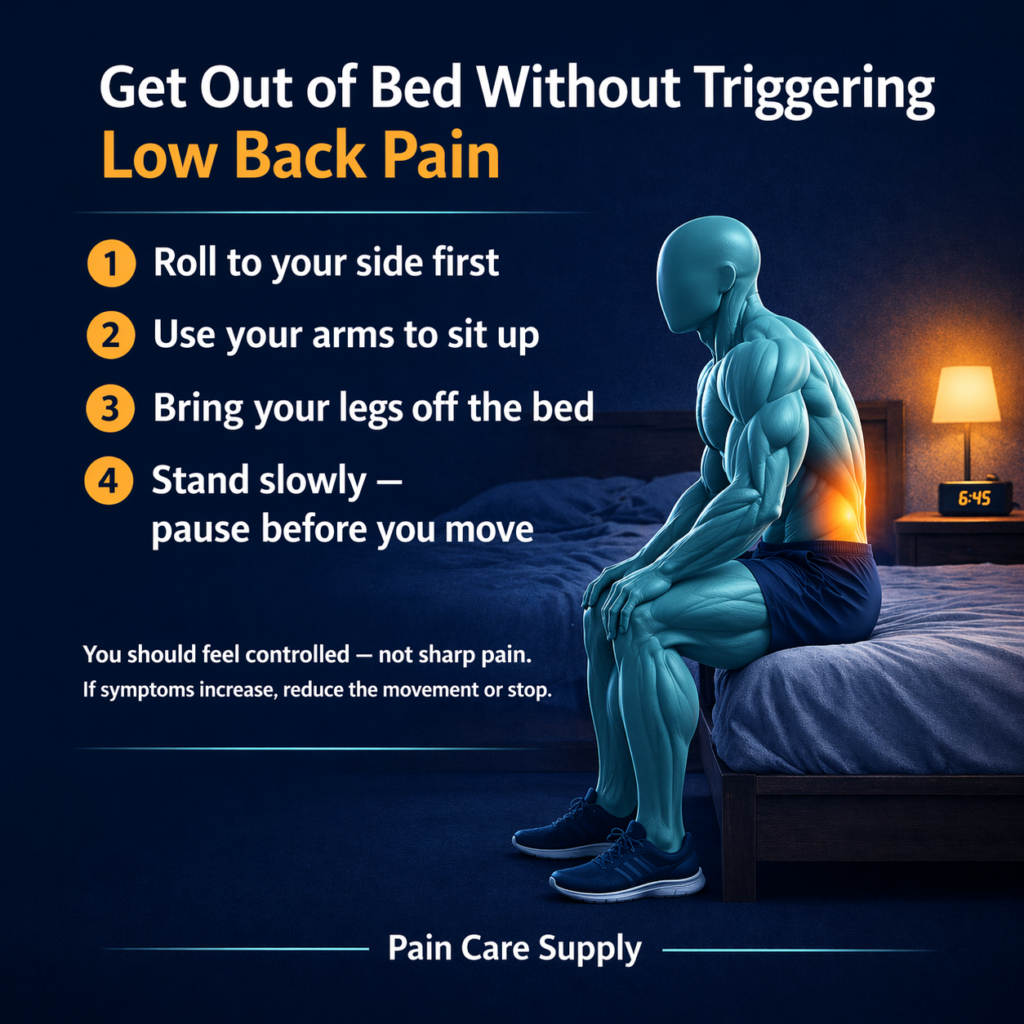
1. Roll to your side
Before you sit up — roll onto your side.
Keep your shoulders and hips moving together.
Think of your body as one unit.
No twisting. No separating top from bottom.
Most people have been jackknifing out of bed
for years without knowing it.
This one change removes a significant amount
of early morning load from your spine.
You should feel a controlled shift —
not sharp pain.
If symptoms increase, reduce the movement
or stop.
If you experience sharp pain, numbness,
tingling, or any symptoms listed in the
red flag section — stop immediately and
consult a healthcare provider.
────────────────────────────────────────
2. Use your arms to sit up
From your side, press your hands into
the mattress.
Use your arms to lift your body upright.
Do not pull yourself forward with your back.
This is the part most people skip.
Your arms exist for exactly this moment.
Let them do the work your back has been
doing alone every single morning.
Your spine stays controlled.
Your arms do the work.
You should feel a stable, supported lift —
not sharp pain.
If symptoms increase, reduce the movement
or stop.
If you experience sharp pain, numbness,
tingling, or any symptoms listed in the
red flag section — stop immediately and
consult a healthcare provider.
────────────────────────────────────────
3. Bring your legs off the bed
As you push up, let your legs move off
the side of the bed.
This counterbalances your body naturally
and reduces the load transfer to your
lower back.
It feels slower than what you are used to.
That is the point.
Slower here means less load. Less load
means less irritation.
You should feel a smooth, controlled shift
in weight — not sharp pain.
If symptoms increase, reduce the movement
or stop.
If you experience sharp pain, numbness,
tingling, or any symptoms listed in the
red flag section — stop immediately and
consult a healthcare provider.
────────────────────────────────────────
4. Stand slowly
Once seated at the edge of the bed —
pause.
Do not rush into standing.
Do not reach for your phone.
Do not start talking to anyone yet.
Give your body a few seconds to register
where it is before you ask it to hold
your full weight.
Then stand slowly and let everything settle.
This pause is not wasted time.
This is the moment most people skip —
and it is exactly why the same pain
shows up every single morning.
You should feel a controlled, gradual
transition — not sharp pain.
If symptoms increase, reduce the movement
or stop.
If you experience sharp pain, numbness,
tingling, or any symptoms listed in the
red flag section — stop immediately and
consult a healthcare provider.
────────────────────────────────────────
POSITION
Keep your shoulders and hips aligned
throughout the entire movement.
Avoid twisting or jerking into position.
Every part of this should feel deliberate —
not reactive.
────────────────────────────────────────
RANGE
You should feel controlled movement —
not sharp pain.
Stay in a tolerable range.
If something increases — back off.
────────────────────────────────────────
TIMING
Move at a pace that feels controlled —
not rushed.
The transition from lying to standing
should feel unhurried.
Let your body set the pace.
────────────────────────────────────────
REPS
Do this every time you get out of bed.
Not just when you are in pain.
Consistency is what builds tolerance.
One morning done right is worth more than
ten mornings of triggering the same response.
────────────────────────────────────────
PROGRESSION
Once this feels easier and more automatic:
Reduce how much you rely on your arms
Increase the smoothness of the movement
Add a brief standing reset before you
start your morning
Build gradually.
When something starts to feel boring —
that is your signal to progress.
Not before.
────────────────────────────────────────
FEEL CHECK
You should feel a mild, controlled
transition — not sharp pain.
Stay in a tolerable range.
“If you experience sharp pain, numbness,
tingling, or any symptoms listed in the
red flag section — stop immediately and
consult a healthcare provider.”
────────────────────────────────────────
RED FLAG PROTOCOL
STOP and seek immediate medical attention
if you experience:
— Loss of bladder or bowel control
— Numbness or tingling in the groin or
inner thigh
— Sudden severe weakness in both legs
— Chest pain, dizziness, or difficulty
breathing during movement
— Symptoms that are rapidly worsening
STOP and consult a licensed provider
before continuing if you experience:
— New or increasing numbness or tingling
down the leg or into the foot
— Sharp shooting pain that worsens with
every attempt at movement
— Significant increase in symptoms after
two or more sessions
— Fever, unexplained weight loss, or night
pain that wakes you from sleep
────────────────────────────────────────
IF THIS KEEPS COMING BACK
Most people get to this point and think —
I will keep working on it on my own.
Six months later they are in the same place.
Still bracing every morning.
Still calculating how to get out of bed
without triggering it again.
If getting out of bed has been a trigger
for a while — this is a starting point.
The full picture is at
paincaresupply.com/free
If this has been building —
this is where most people wait too long.
Don’t.
Start here: paincaresupply.com/free
Free resource from Pain Care Supply.
By downloading, you will be added to our
email list. You may unsubscribe at any time.
────────────────────────────────────────
FTC DISCLOSURE
This content is provided by Pain Care Supply.
Some links may lead to products or services
we offer. We may benefit commercially from
your use of those links.
────────────────────────────────────────
© Pain Care Supply. All rights reserved.