

Sciatica is often described as pain that travels from the low back into the leg. It can feel sharp, burning, or even like an electric sensation. For some people, it comes and goes. For others, it lingers and flares up unexpectedly.
What makes sciatica confusing is that it’s not always about damage. In many cases, the nerve is irritated or sensitive, which changes how your body responds to movement, position, and load.
Understanding this can help you make better decisions when symptoms spike.
————————————————–
WHAT SCIATICA ACTUALLY IS
Sciatica refers to irritation of the sciatic nerve.
This nerve runs from your lower back, through your glute, and down your leg.
When it becomes irritated, you may feel:
• pain traveling down the leg
• tingling or numbness
• sensitivity with certain movements
• discomfort when sitting or bending
————————————————–
PCS CLINICAL INSIGHT
Pain traveling down the leg does not always mean something is severely damaged.
In many cases, the system is more sensitive, not necessarily more injured.
————————————————–
WHY SCIATICA MAY HAPPEN
There are several contributing factors:
• prolonged sitting or poor position tolerance
• sudden increases in activity
• limited movement variability
• reduced load capacity over time
The body adapts to what you do most.
If you stay in one position too long or overload too quickly, symptoms may increase.
————————————————–
COMMON AGGRAVATING FACTORS
• prolonged sitting
• aggressive stretching
• bending under load
• staying in one position too long
• forcing movement through pain
————————————————–
COMMON MISTAKE DURING A FLARE-UP
Many people try to stretch aggressively right away.
Hamstring stretching, twisting, or forcing mobility can sometimes increase irritation, especially early on.
————————————————–
QUICK STRATEGY
During a flare-up, focus on:
• changing positions frequently
• reducing irritation first
• avoiding aggressive stretching early
————————————————–
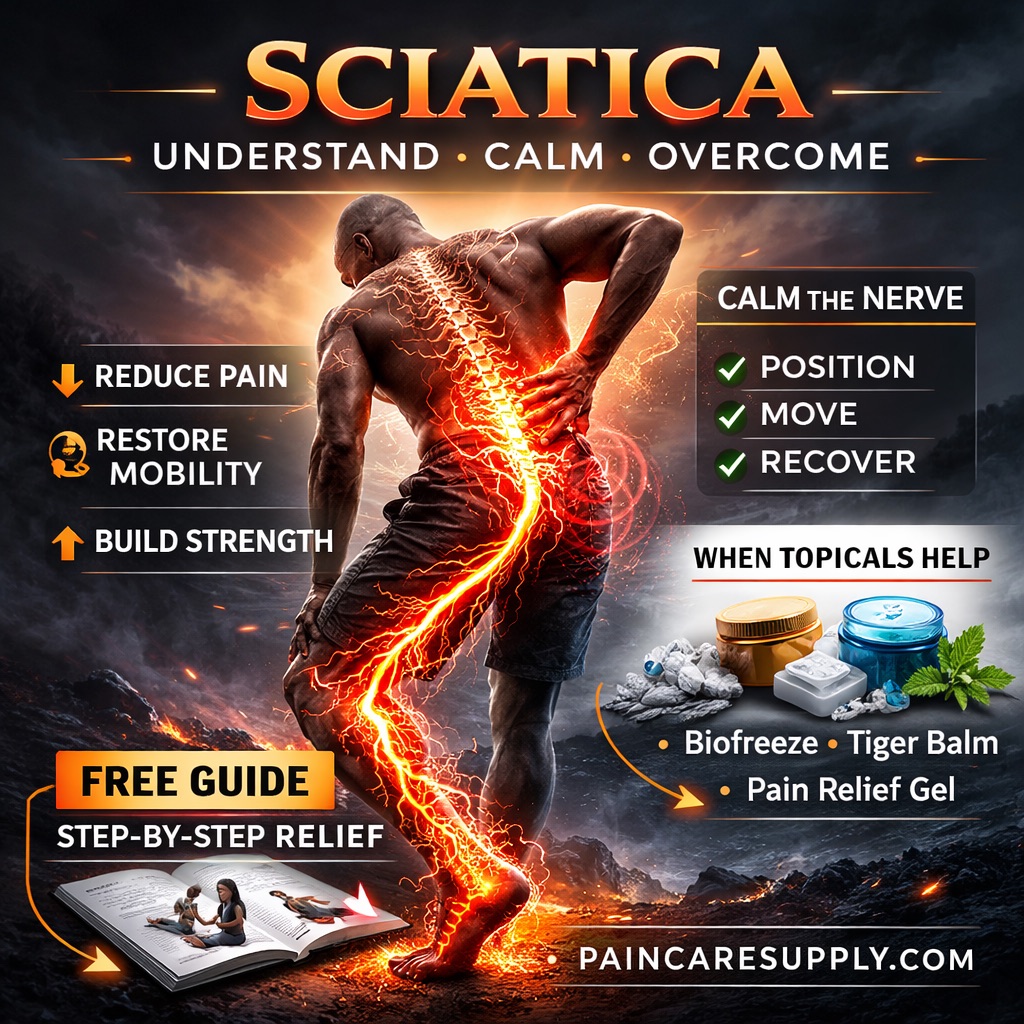
WHEN TOPICALS MAY HELP
Some people use topical products during flare-ups to help reduce discomfort.
These do not fix the underlying issue, but they may make it easier to move and tolerate positions while symptoms are high.
For example:
Topicals
• Biofreeze
→ https://paincaresupply.com/product/biofreeze-pain-relief-gel/
• Tiger Balm
→ https://paincaresupply.com/product/tiger-balm-ultra-strength/
• STO Pain Relief Gel
→ https://paincaresupply.com/product/stopain-extra-strength-pain-relieving-gel/
These are often used temporarily to help manage symptoms while you work on movement and positioning.
————————————————–
IMPORTANT
Topicals may support symptom relief, but they do not cure sciatica.
They are best used alongside:
• movement adjustments
• position changes
• gradual capacity building
————————————————–
BUILDING CAPACITY OVER TIME
Long-term improvement usually comes from increasing what your body can tolerate.
This includes:
• gradual exposure to movement
• improving strength and control
• avoiding large spikes in load
Consistency matters more than intensity.
————————————————–
KEY TAKEAWAY
Sciatica is often about irritation and sensitivity, not just tight muscles.
Focus on calming the system first, then gradually building your capacity to move and load over time.
————————————————–
If your pain is flared up right now, you can explore simple tools that some people use to help reduce irritation here:
If you’re looking for a more structured, step-by-step approach to calming symptoms and building back control, we’ve also put together a free guide that walks you through the process.
You can access it here:
It’s designed to complement what you’ve just learned and give you a clear starting point.
————————————————–
RELATED READING
If you want to go deeper into this topic, you can explore these:
• Sciatica Starter Guide
→ https://paincaresupply.com/free
• 3 Positions That May Help Calm a Sciatica Flare
→ https://paincaresupply.com (search: “Sciatica Positions”)
• Load vs Capacity: Why Pain Keeps Returning
→ https://paincaresupply.com (search: “Load vs Capacity”)
————————————————–
PEOPLE ALSO ASK
What causes sciatica to flare up?
Flare-ups may be influenced by increased irritation, prolonged positions, or sudden changes in activity.
Should I stretch during sciatica pain?
Aggressive stretching early may increase irritation. It may be more helpful to calm symptoms first.
Do topical creams help sciatica?
They may help reduce discomfort temporarily, which can make movement more tolerable.
Is sciatica permanent?
In many cases, symptoms can improve with proper management and gradual capacity building.