
Description
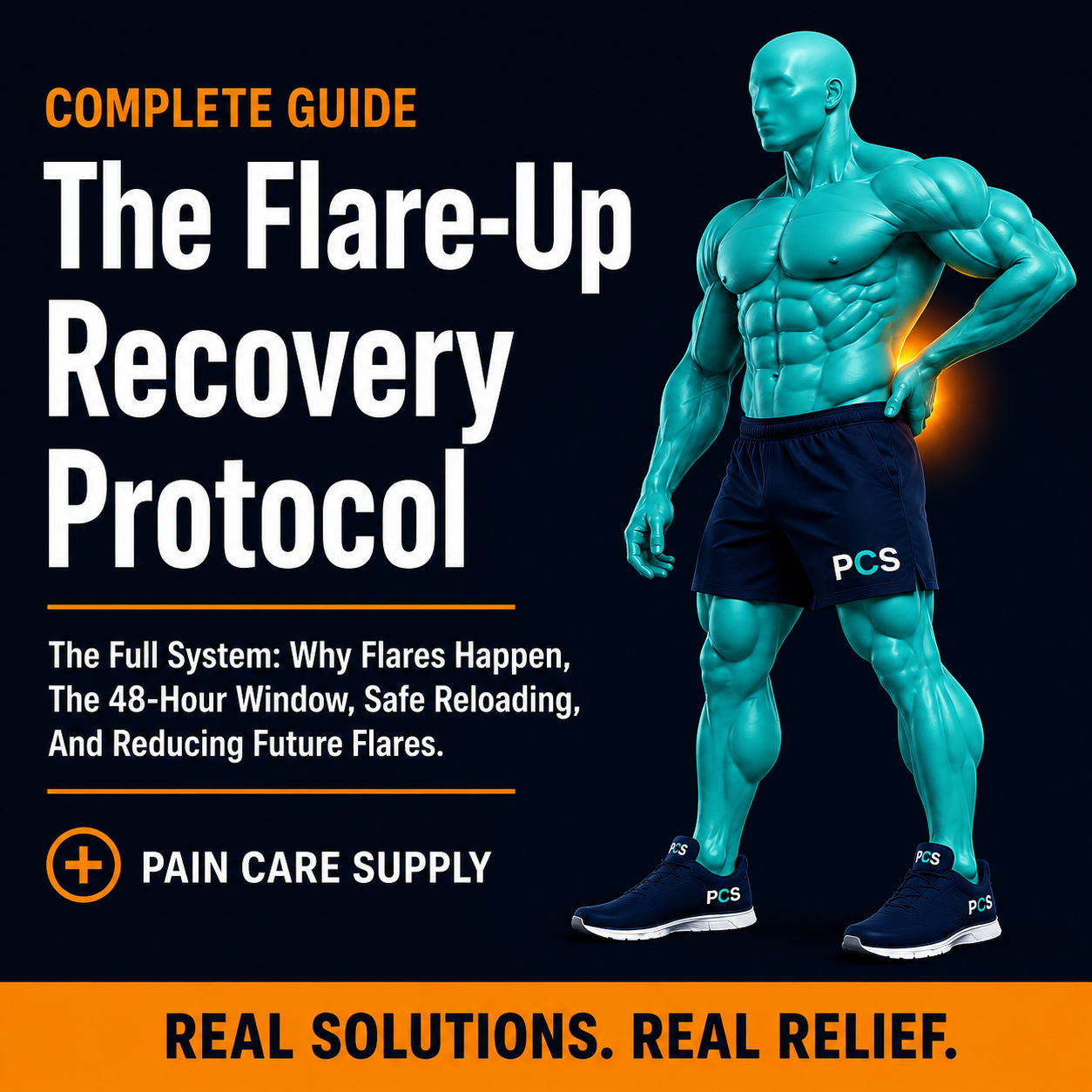
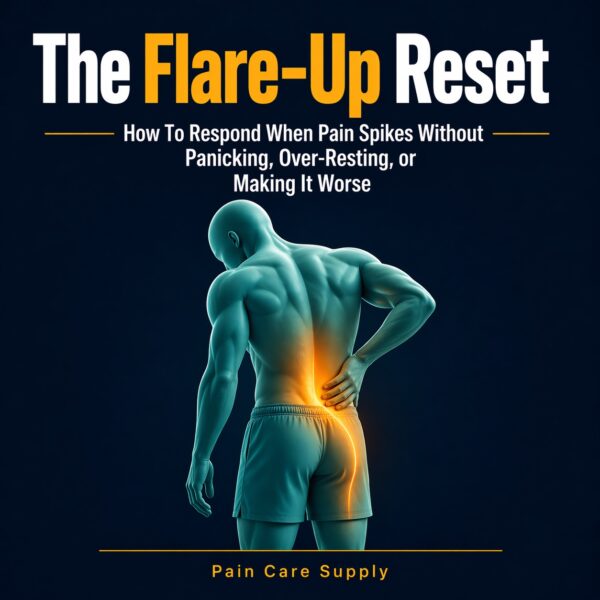
A flare feels like damage. Sharp, sudden, alarming — and the first thought is almost always “I hurt it again.” In most cases, that’s not what’s actually happening. A flare is usually a temporary drop in tolerance, not new tissue damage — but knowing that in the moment doesn’t stop the panic, the over-resting, or the instinct to push through it out of frustration.
This guide gives you the full system for handling a flare from the first minute it hits through the weeks after it settles. It starts with exactly what to do in the first 48 hours — how to lower the threat, reduce load without stopping movement entirely, and avoid the handful of common reactions that actually make a flare last longer. From there, it walks through what a flare really is, why they build up the way they do, and how to read your body’s signals so you catch the early warning instead of the late one.
Once the spike settles, this guide also covers how to safely reload activity without swinging too far in either direction — resting too long or jumping back in too fast — and closes with a long-term approach to reducing how often flares happen at all: load management, recovery, sleep, and stress, the things that quietly determine how much your body can handle before it reacts.
This content is for informational and educational purposes only. It is not medical advice and does not replace the guidance of a licensed healthcare provider. If you are experiencing pain, injury, or any health condition, consult a qualified medical professional before beginning any movement or self-management program. Do not use this content to diagnose or treat any condition. Results vary by individual.
Reviews
There are no reviews yet.