

This content is for informational and educational purposes only. It is not medical advice and does not replace the guidance of a licensed healthcare provider. If you are experiencing pain, injury, or any health condition, consult a qualified medical professional before beginning any movement or self-management program. Do not use this content to diagnose or treat any condition.
STOP and seek immediate medical attention if you experience:
• Loss of bladder or bowel control
• Numbness or tingling in the groin or inner thigh
• Sudden severe weakness in both legs
• Chest pain, dizziness, or difficulty breathing
• Rapidly worsening symptoms
STOP and consult a licensed provider before continuing if you experience:
• Increasing numbness or tingling down the leg or foot
• Sharp worsening pain with movement
• Symptoms that worsen after two or more sessions
• Fever, unexplained weight loss, or night pain that wakes you from sleep
─────────────────────────────────────────────────────────────
If you have tried everything and your leg pain keeps waking you up at night — you are not alone. Most people in this situation do not know that how they lie down matters as much as anything they do during the day. The wrong position keeps loading the nerve. The right sequence can start reducing that load in minutes. This is where to start.
─────────────────────────────────────────────────────────────
IF YOUR LEG PAIN INCREASES WHEN YOU LIE ON YOUR BACK AT NIGHT AND YOU FEEL STUCK OR UNSURE WHAT TO DO — THIS IS FOR YOU.
─────────────────────────────────────────────────────────────
DO THIS FIRST
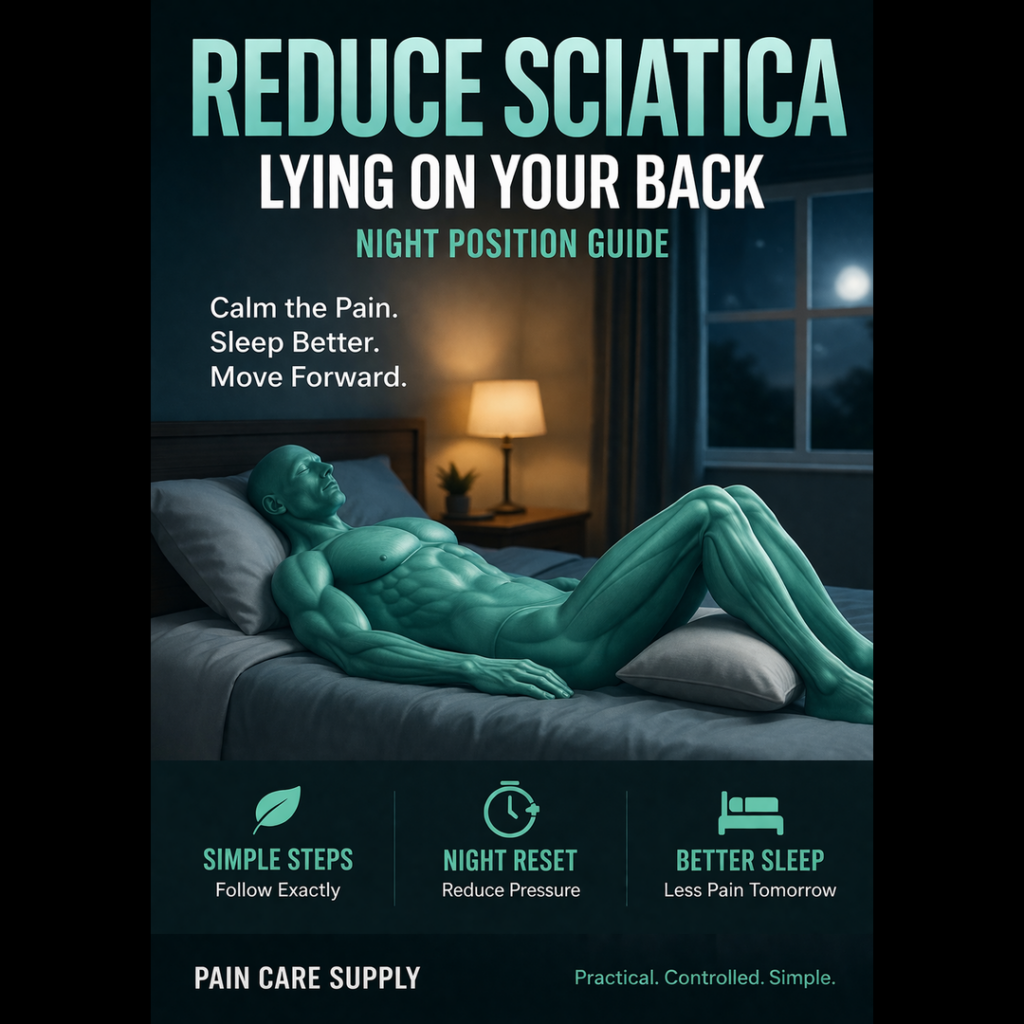
1. Lie on your back with knees bent
2. Place a pillow under both knees
3. Hold for 60 seconds before adjusting
You should feel pressure reduce in your back or leg.
You should NOT feel sharp pain, spreading symptoms, or loss of control.
If you experience sharp pain, numbness, tingling, or any red flag symptom listed above — stop immediately and consult a healthcare provider.
─────────────────────────────────────────────────────────────
STEP-BY-STEP EXECUTION
POSITION A
• Position: on your back, head supported, knees bent
• Range: knees bent approximately 30–60 degrees
• Timing: hold 60–90 seconds
• Reps: 1–2 cycles
You should feel a mild decrease in tension along the back or leg.
Avoid forcing your back flat or pushing into discomfort.
POSITION B
• Position: slide the painful leg slightly forward from base
• Range: increase knee bend by 10–20 degrees
• Timing: hold 20–30 seconds
• Reps: 2–3 cycles
You should feel less pull or tension running down the leg.
Avoid any increase or spread of symptoms — return to base if this occurs.
POSITION C
• Position: return to base position
• Range: small weight shift off the painful side — 10–15 percent
• Timing: every 1–2 minutes
• Reps: 2–3 resets per session
You should feel more even pressure across the lower back.
Avoid holding one position too long without resetting.
─────────────────────────────────────────────────────────────
DECISION RULE
IF pain moves down the leg → stop and return to base position immediately
IF pain stays local or improves → continue and hold the full timing
IF pain does not change → stay at the same position — do not force progression
─────────────────────────────────────────────────────────────
IF THIS HAPPENS — YOU MISSED IT
Pain spreads further down the leg → position was too aggressive — return to base and reduce knee bend
Pain spikes on movement → you adjusted too quickly — slow down and add 10 seconds to each hold
Pain lingers after the session → no early reset was done — add Position C weight shifts every 60 seconds
─────────────────────────────────────────────────────────────
RELIEF MOMENT
Use this at the end of each session or any time symptoms begin to settle.
• Position: on your back, knees bent in base position
• Range: small pelvic tilt — 5 to 10 percent range only
• Timing: 5 slow breaths — approximately 30 to 60 seconds
• Reps: 1–2 cycles
You should feel tension ease slightly through the lower back and leg.
Avoid pushing into pain or forcing the movement.
─────────────────────────────────────────────────────────────
TOOL SUPPORT (OPTIONAL)
A topical recovery aid applied to the lower back or glute area — Pain Care Supply carries options designed for this use. Visit paincaresupply.com/product-category/topicals/
Timing: after completing your positioning session or before sleep
Use: follow product instructions
This may help reduce perceived discomfort. Avoid using as a replacement for movement control.
This content is provided by Pain Care Supply. Some links may lead to products or services we offer. We may benefit commercially from your use of those links.
─────────────────────────────────────────────────────────────
WHAT COMES NEXT
This is step one. Night positioning is where most people need to start — because sleep is when the body needs the most support and most people have no system for it.
Once this feels controlled, the next step is managing symptoms in the first 10 minutes after waking. That is where the morning reset begins.
Start with short holds. Build gradually. Do not skip the decision rule.
─────────────────────────────────────────────────────────────
IF LYING ON YOUR BACK AT NIGHT KEEPS TRIGGERING YOUR SYMPTOMS —
THIS GUIDE IS YOUR FIRST STEP. START HERE TONIGHT.
Free Flare-Up Reset Guide
Free resource from Pain Care Supply. Download adds you to our email list. Unsubscribe anytime.
─────────────────────────────────────────────────────────────
© Pain Care Supply. All rights reserved. This content may not be reproduced, distributed, or used without express written permission from Pain Care Supply.